
List of all cryptocurrencies
Our Cryptocurrencies and Tokens Table is designed to provide you with the most up-to-date and relevant information about digital assets. In addition to the name, price, 24h change, market cap, circulating supply, and 24h volume, we provide valuable metadata to help you make informed investment decisions igt software. Here’s a breakdown of the different metadata categories:
Our table is initially sorted by market cap size. To identify the top crypto losers within the visible list, click on the “Change (24h)” column header. This will sort the cryptocurrencies based on their percentage changes over the last 24 hours. Click the header again to reverse the order and display the top losers at the top of the list.
Welcome to CoinMarketCap.com! This site was founded in May 2013 by Brandon Chez to provide up-to-date cryptocurrency prices, charts and data about the emerging cryptocurrency markets. Since then, the world of blockchain and cryptocurrency has grown exponentially and we are very proud to have grown with it. We take our data very seriously and we do not change our data to fit any narrative: we stand for accurately, timely and unbiased information.
Our platform features a comprehensive list of all cryptocurrencies and tokens worldwide. Each coin’s page displays its country of origin, allowing you to click through and explore other cryptos and tokens based in that country. Additionally, you can visit our country list page at to find all the cryptocurrencies and tokens sorted by their respective countries.
CoinMarketCap does not offer financial or investment advice about which cryptocurrency, token or asset does or does not make a good investment, nor do we offer advice about the timing of purchases or sales. We are strictly a data company. Please remember that the prices, yields and values of financial assets change. This means that any capital you may invest is at risk. We recommend seeking the advice of a professional investment advisor for guidance related to your personal circumstances.
Are all cryptocurrencies mined
As noted, both methods have their own advantages and disadvantages. But if there is an X-factor here that hasn’t been discussed, it’s that eventually some of the most prominent mined cryptocurrencies, such as bitcoin, will reach their token supply limit. At such a point, it would only make sense for mined cryptocurrencies to switch over to the non-mined, proof-of-stake method. Since proof-of-stake significantly reduces electricity costs and consumption, as well as takes away the computing network threat associated with proof-of-work, my belief is we’ll see a slow but steady shift toward non-mined cryptocurrencies in the future.
As new blockchain transactions are made, they are sent to a pool called a memory pool (or mempool). Validating nodes are responsible for verifying the validity of transactions. The job of a miner is to collect these pending transactions and organize them into blocks. Note that some miners also run validating nodes, but mining nodes and validating nodes are technically different.
The new hash outputs are then organized into pairs and hashed again, and the process is repeated until a single hash is created. This last hash is known as the root hash (or Merkle root) and is basically the hash that represents all the previous hashes used to generate it.
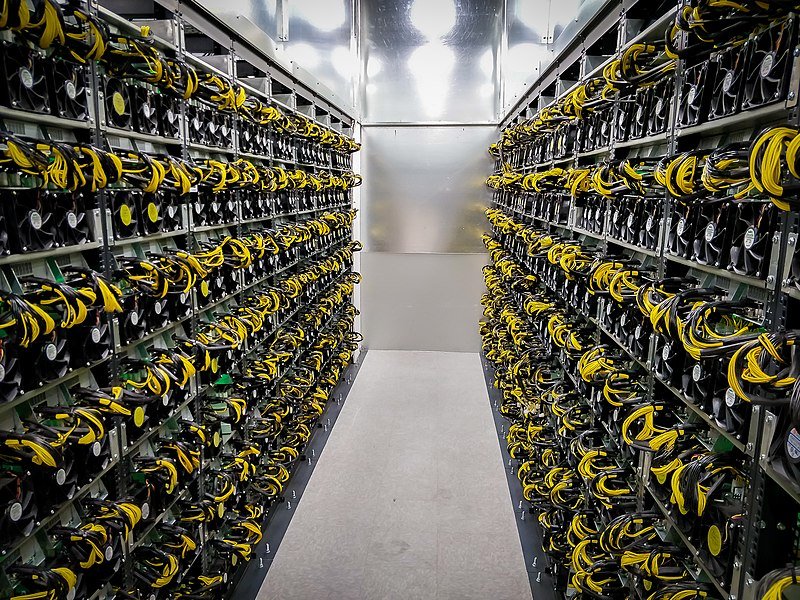
As noted, both methods have their own advantages and disadvantages. But if there is an X-factor here that hasn’t been discussed, it’s that eventually some of the most prominent mined cryptocurrencies, such as bitcoin, will reach their token supply limit. At such a point, it would only make sense for mined cryptocurrencies to switch over to the non-mined, proof-of-stake method. Since proof-of-stake significantly reduces electricity costs and consumption, as well as takes away the computing network threat associated with proof-of-work, my belief is we’ll see a slow but steady shift toward non-mined cryptocurrencies in the future.
As new blockchain transactions are made, they are sent to a pool called a memory pool (or mempool). Validating nodes are responsible for verifying the validity of transactions. The job of a miner is to collect these pending transactions and organize them into blocks. Note that some miners also run validating nodes, but mining nodes and validating nodes are technically different.
Do all cryptocurrencies use blockchain
On the flip side, PoS is more like the strategic investor, choosing validators based on the amount of crypto they’re willing to “stake” as collateral. While PoW guzzles energy like an SUV, PoS sips it like a hybrid car, making it a more eco-conscious choice.
The top 5 cryptos under $1 that could give 50x gains in the 2023 bull market are RenQ Finance, Shiba Inu, Cardano, Dogecoin, and Algorand. As with any investment, it is important to conduct your due diligence and invest only what you can afford to lose.
“We see great potential in the area of smart contracts—using blockchain technology and coded instructions to automate legal contracts,” says Gray. “A properly coded smart legal contract on a distributed ledger can minimize, or preferably eliminate, the need for outside third parties to verify performance.”

On the flip side, PoS is more like the strategic investor, choosing validators based on the amount of crypto they’re willing to “stake” as collateral. While PoW guzzles energy like an SUV, PoS sips it like a hybrid car, making it a more eco-conscious choice.
The top 5 cryptos under $1 that could give 50x gains in the 2023 bull market are RenQ Finance, Shiba Inu, Cardano, Dogecoin, and Algorand. As with any investment, it is important to conduct your due diligence and invest only what you can afford to lose.
“We see great potential in the area of smart contracts—using blockchain technology and coded instructions to automate legal contracts,” says Gray. “A properly coded smart legal contract on a distributed ledger can minimize, or preferably eliminate, the need for outside third parties to verify performance.”